

The US-Israel-Iran war has lasted for over 10 days – and with no signs of either side relenting the global economy is feeling the ripple effects of conflict. The economic fallout from the Iran war is reverberating across the globe, affecting economies in nearly every region.Economists are currently considering two possibilities for how the global economy might respond. In the first scenario, the conflict in the Middle East is seen to subside quickly, enabling oil and natural gas prices to return to more stable levels by the summer. In that case, the broader impact on global growth and inflation would likely remain limited.However, the second scenario assumes that disruptions in energy supplies will persist for a longer period, eventually pushing up everyday expenses such as food and travel during the summer months, says a Wall Street Journal report.In a more pessimistic outlook outlined by Goldman Sachs, crude prices could climb back to around $100 per barrel and remain elevated. Such a development could reduce global economic growth by roughly half a percentage point while increasing inflation by nearly one percentage point over the next year.
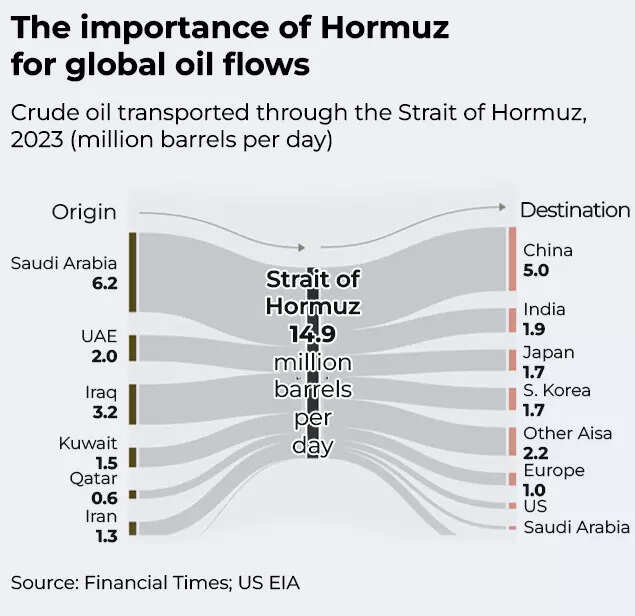
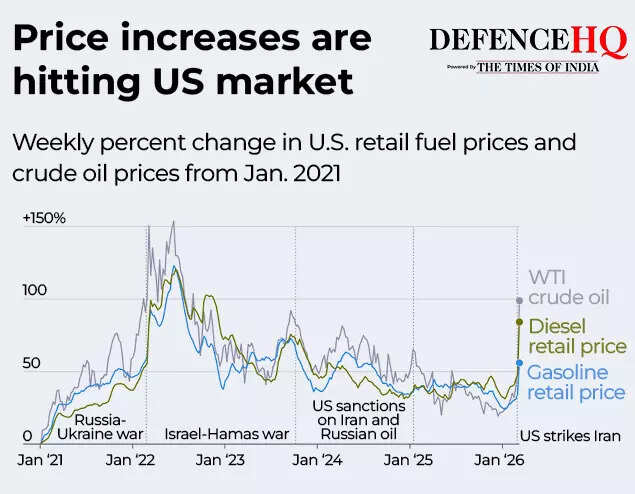
The effects of this situation will vary across countries, with some economies facing greater strain while others could see limited gains. The list of losers, winners and those that are insulated is long. Let’s take a look:United States of America (insulated, though not really immune!)Over the past decade, the shale revolution has turned the US into a net exporter of energy, reducing its exposure to external oil-related shocks. Even so, the world’s largest economy is not completely insulated from the consequences of the ongoing war.One example of where the war will pinch is fuel prices for consumers. Since the tensions in the Middle East escalated, the cost of regular unleaded gasoline has risen by about 20%. This steep rise in gas costs would hit household budgets, leaving less room for spending on other goods and services.Also, higher fuel prices may weigh on the profitability of industries such as airlines, cruise companies and manufacturing firms.
The benefit from the situation would go to American energy producers who could benefit from the stronger price environment.Wall Street Journal quoted Oxford Economics saying that if Brent crude averages around $80 per barrel over the coming months, inflation in the United States could increase by roughly 0.2 percentage point, while economic growth may decline by about 0.1 percentage point!Middle East at a precipiceIn a scenario where oil prices rise, Gulf countries end up as beneficiaries. The scenario is playing out differently this time. Disruptions around the Strait of Hormuz have curbed exports and forced producers to scale back their output.WSJ quoted Capital Economics saying that even a short-lived conflict could cause Gulf economies to shrink by as much as 2% this year! If hostilities persist for a longer period, this downturn could deepen significantly, with economic output potentially falling by up to 15%!Amongst the Middle East economies, Kuwait and Qatar are expected to face the most severe impact due to their heavy dependence on energy production, while Saudi Arabia and the United Arab Emirates may be able to offset some of the losses by transporting additional volumes through pipeline networks.And it’s not just about the energy hit. The unrest has also undermined the Gulf region’s reputation as a safe and stable destination. This could pose risks to large-scale economic transformation programmes such as Saudi Arabia’s Vision 2030, which depend heavily on foreign investment. Tourism in the Middle East is also likely to suffer. Research firm Tourism Economics estimates that the number of international visitors could decline by as much as 27% this year, potentially resulting in revenue losses of up to $56 billion.The effects of the conflict are spreading across neighbouring economies as well. In Egypt, the pound fell to a record low against the dollar this week amid fears that higher energy import costs will place additional pressure on already strained public finances. At the same time, the ongoing conflict is expected to worsen Iran’s existing economic difficulties.
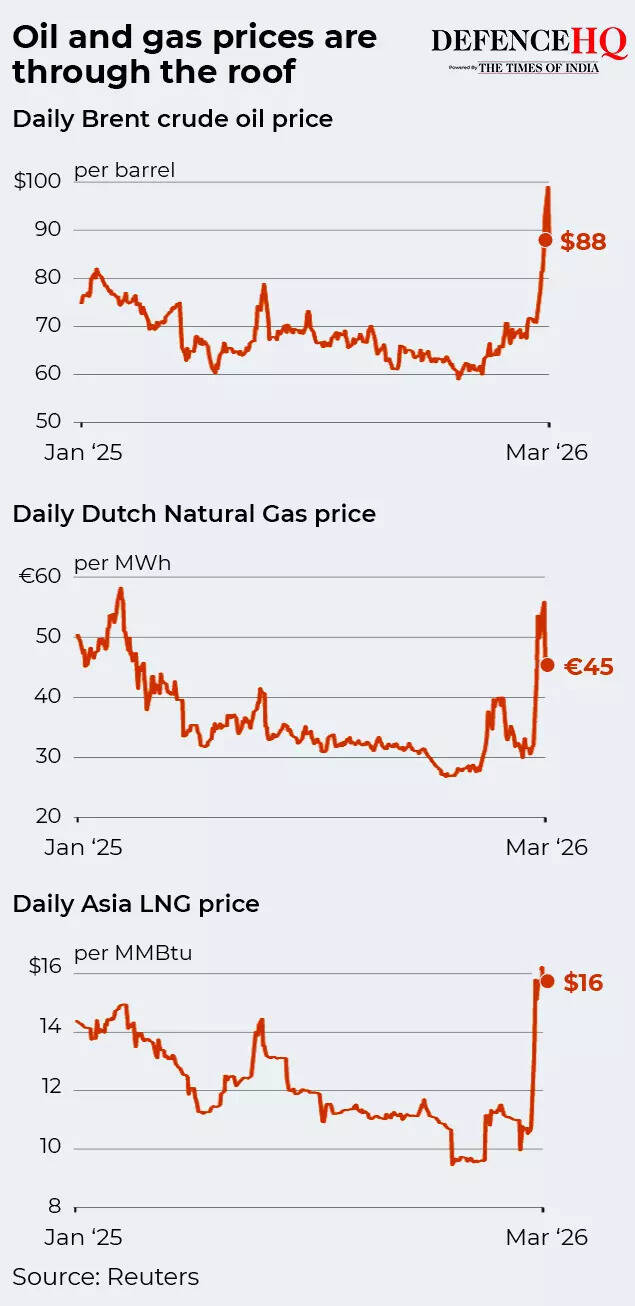
Europe’s Energy Shock Reloads – Though Not Like The Last TimeIf energy prices continue to be on the higher side for a long period of time, it could slow the fragile economic recovery currently underway across the continent. The European Union depends heavily on imported fossil fuels, which account for roughly 58% of its total energy consumption. Among the world’s major economies, only South Korea and Japan rely more on overseas fossil-fuel supplies.Although most European nations purchase limited energy directly from the Middle East, they remain vulnerable to rising global prices. Reduced supply from the Gulf has intensified competition for alternative sources, triggering a surge in oil prices elsewhere. As a result, gas prices in Europe have climbed by more than 50% this month!Oxford Economics estimates that the inflationary effect of higher energy costs in the eurozone could be about three times greater than in the United States. Italy is expected to face particularly sharp increases, partly because of its stronger reliance on liquefied natural gas imported from Qatar.Despite these pressures, economists generally do not anticipate a crisis comparable to the one that followed Russia’s invasion of Ukraine in 2022. During that period, European natural gas prices surged beyond €300 per megawatt hour—roughly equivalent to $348—driving inflation above 10%. Currently, natural gas prices remain far lower, at around €50 per megawatt hour.
China is resilient – and how!China holds certain advantages that many other Asian economies lack, says the WSJ report. Although China is the world’s biggest importer of crude oil, it has spent years strengthening its safeguards against potential energy disruptions. Estimates suggest China maintains strategic petroleum reserves of over one billion barrels, providing enough supply to cover several months if needed. In addition, China has made significant investments in renewable energy, promoted electric vehicles through subsidies, and continues to rely on a substantial domestic coal industry that can be used when required.India Faces Energy Supply ShockIndia is dependent on the Middle East for a big percentage of its crude oil, LNG, and LPG imports. India imports most of its energy requirements and the ongoing Middle East crisis has prompted the government to take stock of LPG supplies, directing them first for domestic use, even as industries and restaurants face a potential crunch situation.
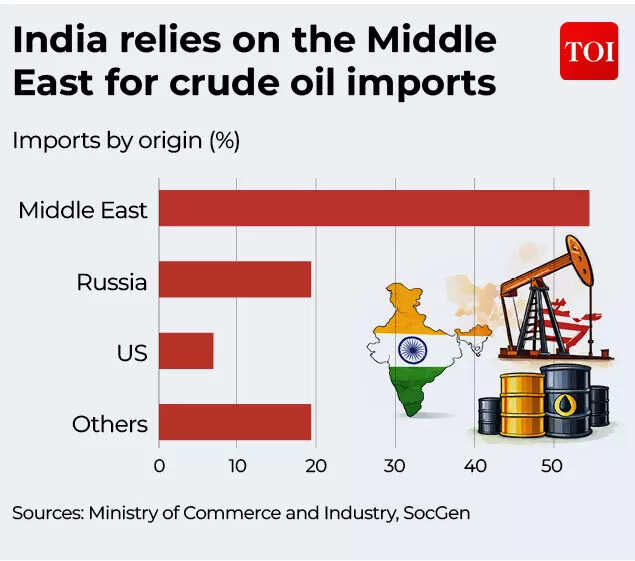
Crude oil imports from Russia have come to the rescue with several million barrels already bought, and refineries have stepped up LPG production to ensure there is no shortage of LPG for household needs. India currently has petroleum reserves and stocks for a few weeks and has said that for now petrol and diesel prices are unlikely to go up.But even as the government manages the energy and fuel situation, the prospect of crude oil prices higher than $100 will have an impact on India’s Current Account Deficit situation and inflation.According to a report by DSP Netra, Every $10 increase in crude adds roughly $12–15 bn to India’s annual import bill. But this correlation is convex, at higher prices, the deficit rises sharply.
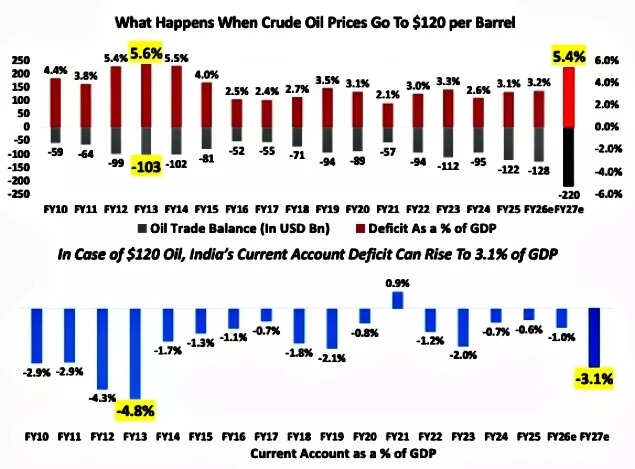
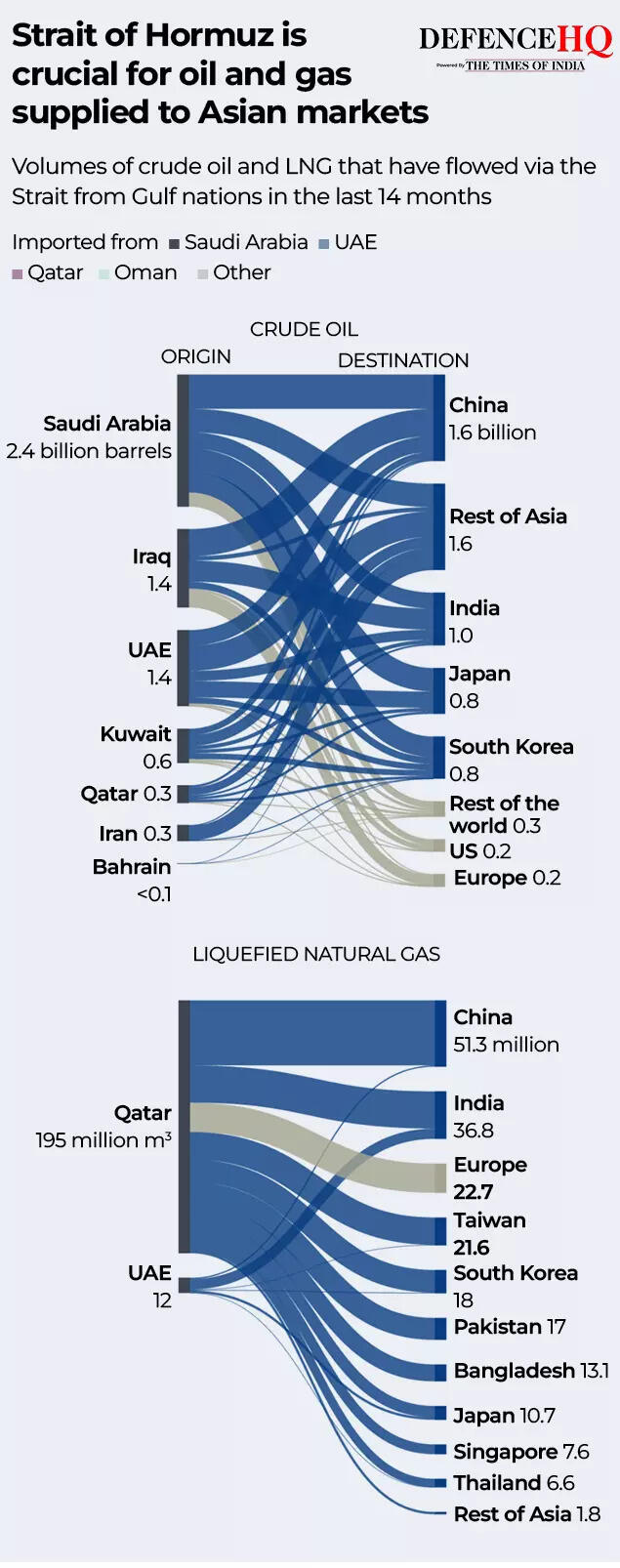
“Assuming crude oil prices rise beyond $120 and India imports at this price for the whole of FY27, the oil trade deficit could rise to $220 billion thereby raising India’s current account deficit beyond 3.1% of GDP. Deficits of this kind can lead to significant currency depreciation, heightened inflation and liquidity crunch. In prior episodes, rupee depreciated more than 10% on such occasions, if the deficits persisted,” DSP Netra cautions.Asian Economies ExposedJapan and South Korea depend more heavily on crude oil shipments from the Middle East, though both countries notably have sizable petroleum reserves. Across Asia, however, many economies rely on liquefied natural gas from the region. Unlike crude oil, LNG is more difficult to store, implying that shortages could emerge more quickly if supplies are disrupted. According to Capital Economics, countries such as Pakistan and Taiwan are particularly exposed to the risk of an LNG supply squeeze.Some governments have already begun taking steps to conserve fuel and protect consumers. South Korea and Thailand have introduced caps on certain domestic fuel prices. In Myanmar, the ruling authorities have begun rationing petrol for private vehicles. Pakistan has asked some government staff to work remotely and announced plans to shut schools for two weeks. Meanwhile, the Philippines has instructed public offices to switch off computers during lunch breaks and ensure air-conditioning systems are not set below 75 degrees Fahrenheit.Russia – and its crude oil trade winsThe war has given Russia an economic boost, at least for the time being. Prior to the outbreak of the war, Western sanctions had made it increasingly difficult for Russia to market its oil. However, disruptions to energy supplies from the Gulf are now driving additional demand for Russian crude, potentially strengthening Moscow’s bargaining position with major buyers such as China, India and other large importers.At the same time, the United States has relaxed certain sanctions, enabling some purchasers to resume buying Russian oil.The surge in global oil and natural-gas prices has also strengthened Russia’s financial position. Russian crude is currently trading above the roughly $59 per barrel level that Moscow requires to balance its national budget.Latin America and Canada could gain from higher pricesHigh energy prices are also likely to support economic growth in oil-producing nations including Canada, Brazil and Venezuela. Venezuela, in particular, has been gradually ramping up production following the removal of Nicolás Maduro in January.Even so, economists expect these countries to face a modest rise in inflation, as higher global energy prices push up costs such as gasoline and air travel.