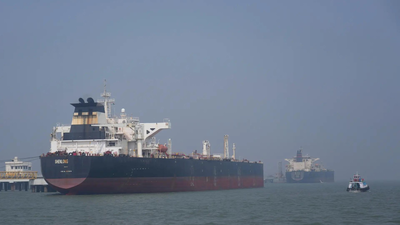
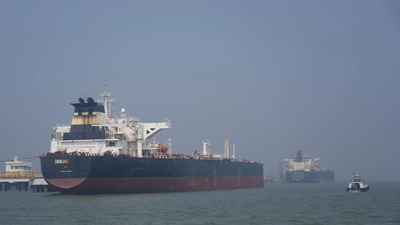
Iran has introduced a ‘safe shipping corridor’ that allows selected vessels to pass through the Strait of Hormuz via a route inside its territorial waters, as tensions in the region continue to disrupt global maritime traffic.The corridor is being offered only to ships that receive prior approval from Iranian authorities, making it a controlled and selective alternative rather than a fully open route through one of the world’s busiest oil chokepoints.
What is the current process for ships to pass through ‘Strait of Hormuz’?
Under the current arrangement, ships must undergo a vetting process before entering the corridor. Several countries, including India, Pakistan, Iraq, Malaysia and China are in discussions with Tehran to coordinate safe passage for their vessels.The system is being managed by Iran’s Islamic Revolutionary Guard Corps (IRGC), which is developing a registration mechanism for ships seeking clearance. Shipping operators are required to share detailed information including vessel ownership, cargo and destination in advance through intermediaries.
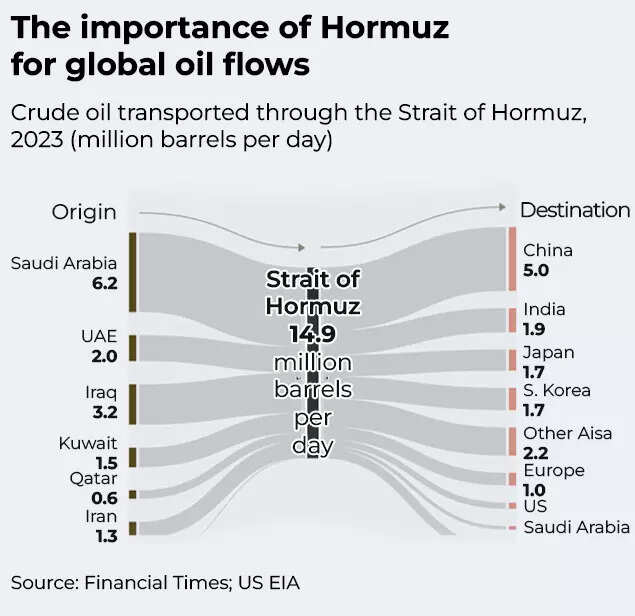
.
While the process is currently being handled on a case-by-case basis, reports suggest that a more formal and structured approval system may be introduced in the coming days, according to maritime news agency Lloyd’s List. At least nine ships have already used the corridor, travelling close to Iran’s Larak Island where the IRGC Navy and port authorities carry out visual inspections.Among them, three India-flagged gas tankers Shivalik, Nanda Devi and Jag Laadki have successfully transited the strait and arrived in India after taking this route. Shipping data indicates that these vessels avoided the usual shorter passage through Omani waters and instead moved through Iranian territorial waters under supervision.
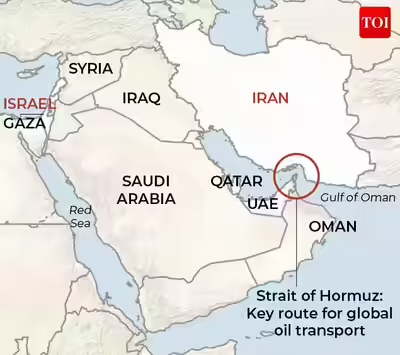
.
Other vessels, including bulk carriers and tankers, have also reportedly followed similar routes.
Costs, risks and global concerns remain
According to a report by Lloyd’s List, at least one tanker operator is believed to have paid around $2 million to secure safe passage. In most cases, approvals have been granted through diplomatic coordination.Despite being described as “safe”, experts have raised concerns over the reliability of the corridor. They warn that clearance from Iranian authorities does not guarantee protection, as different units within the IRGC may still delay or even seize vessels, creating uncertainty for shipping companies.The development has also raised geopolitical concerns. While the United States is currently allowing limited transits to avoid disruptions in global energy supply, analysts believe it may not support such an arrangement in the long term. Any attempt by Iran to assert greater control over the strait could increase tensions and trigger responses.For many global shipping firms, especially those linked to Western countries, the risks remain high. However, operators with trade ties to Iran or fewer geopolitical constraints may continue to explore this option.Meanwhile, overall traffic through the Strait of Hormuz remains low. Most shipowners are avoiding the route due to security concerns, with recent data showing only a small number of transits.Iran has denied allegations that it is blocking the strait and has maintained that it supports free and safe navigation. It has attributed the current disruption to rising regional tensions and external military actions.