Do you notice a layer of dust or chalk forming at the base of your favourite mug? It is quite common in many households, but seldom do we recognise it as a sign that our electric kettle requires maintenance. We take boiling water for granted until the kettle begins making odd noises or takes too long to boil.Before you assume your kettle has reached the end of its life and start browsing for a replacement, take a look in your kitchen cabinet. That simple bottle of white vinegar is often the only tool you need to reverse years of mineral damage and restore your appliance to its original speed.The scale develops from the precipitation of calcium carbonate from hot water. The deposits eventually form a hard layer around the heater, possibly impacting its efficiency.It’s not just that your energy bills will skyrocket; it’s that you’ll end up stressing your internal components to such an extent that you’re likely to see a complete breakdown eventually. And here’s the great part – thanks to the properties of acetic acid, which is found in regular old vinegar, there’s no need for expensive chemicals.How the type of kettle used determines the frequency of descalingIt may surprise you to find out that kettles come in different types. Depending on what your kettle is made of, you may end up having to descale more frequently than you think.A study titled Materials in the Design of Kettles explains that the physical properties of the interior surface play a massive role in how quickly minerals can latch on. For instance, stainless steel is a popular choice because it is naturally resistant to corrosion and provides a smoother surface that is harder for limescale to grip onto.On the other hand, the aluminium kettle is relatively affordable and less weighty. It has the tendency to develop heavy mineral deposits. This is because the structure of the aluminium kettle is such that it encourages the formation of tiny holes which attract and grow deposits. When it comes to the aluminium kettle, one has to do frequent and intensive cleaning to keep the deposits at bay.And the water you use in your area is another factor to consider. If you live in an area with a high concentration of water hardness, then your water will contain more dissolved calcium and magnesium ions. They are not toxic when ingested; however, they are harmful to your electrical heating components. Consistently descaling your device will keep the rock-like scale from forming and ultimately damaging your kettle by burning out its fuse.
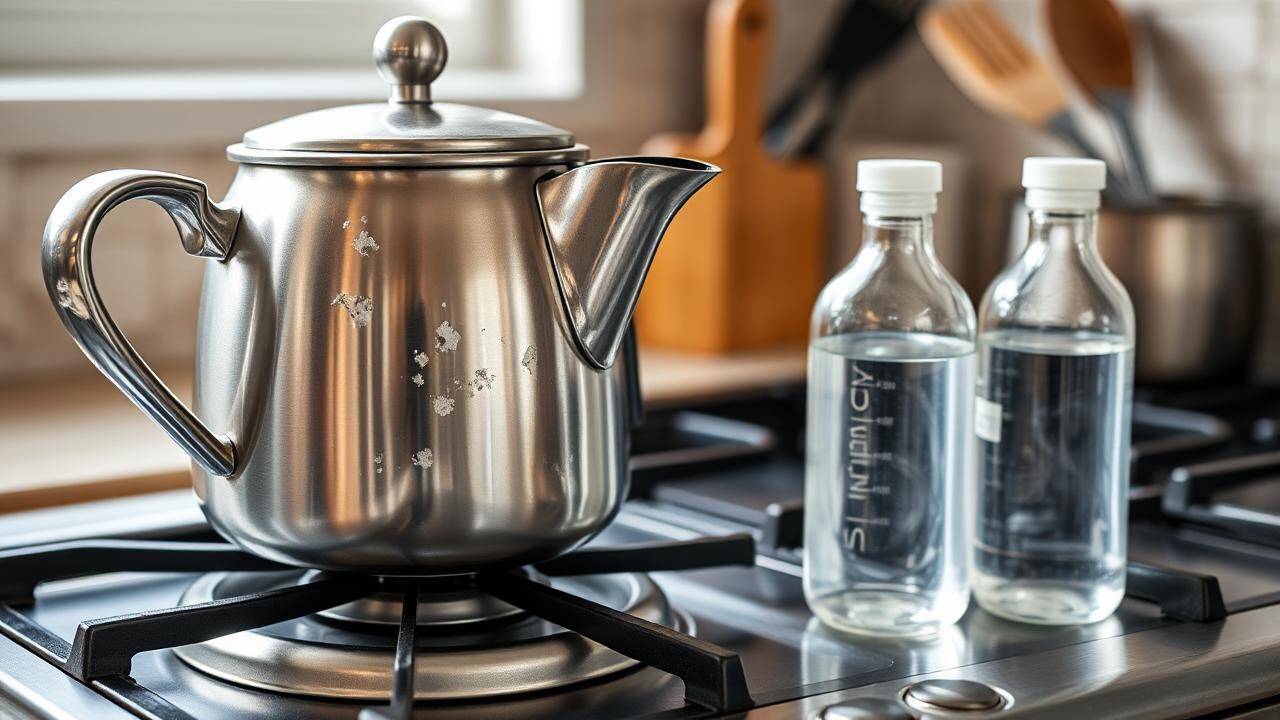
White vinegar, with its acetic acid properties, offers a cost-effective and safe solution for descaling, restoring your kettle’s performance and preventing costly repairs.
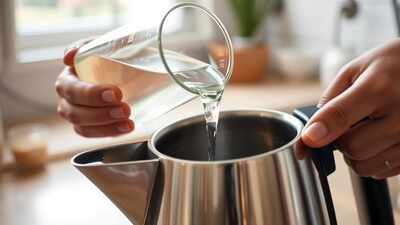
Descale with nature: Easy science at homeWhile there is no shortage of various chemicals that can clean and decalcify your kettle, many people turn to their grandparents’ wisdom.Research featured in the Journal of Cleaner Production regarding the determination of mineral constituents in vinegar samples highlights that vinegar is not just a food item; it is a highly consistent acid source that is perfectly suited for domestic maintenance. Because vinegar is biodegradable and non-toxic, it provides a level of safety that many synthetic cleaners simply cannot match. You do not have to worry about lingering chemical residues affecting the taste of your coffee or, more importantly, your health.In case the strong taste of vinegar doesn’t suit you in the kitchen, there are alternative ingredients which will act similarly. The citric acid available in the lemons or in powdered form will behave as the acid-base combination of vinegar and will be efficient enough in performing light cleaning.In case the kettle requires thorough cleaning due to its prolonged use, white vinegar should be used because of its stronger acidic properties. It is the most cost-effective method to ensure the maintenance of the appliance, thus reducing monthly electricity charges.It is recommended to clean the kettle when it is cold and not connected to electricity. Fill it with a mixture of equal amounts of water and vinegar, heat it up, and wait at least half an hour.After the time is up, pour out the solution and rinse the interior thoroughly with fresh water. You might need to boil a fresh pot of plain water once or twice to completely eliminate any lingering vinegary aroma before you make your next drink.Through adherence to the proactive maintenance schedule, which should be performed a few times each year, one is not simply cleaning a pan but implementing sustainable housekeeping practices. Instead of disposing of a kettle just because it got covered in limescale, contributing to the growing amount of electronic garbage, you are giving new life to your equipment via science. Just a little bit of kitchen chemistry can do wonders.